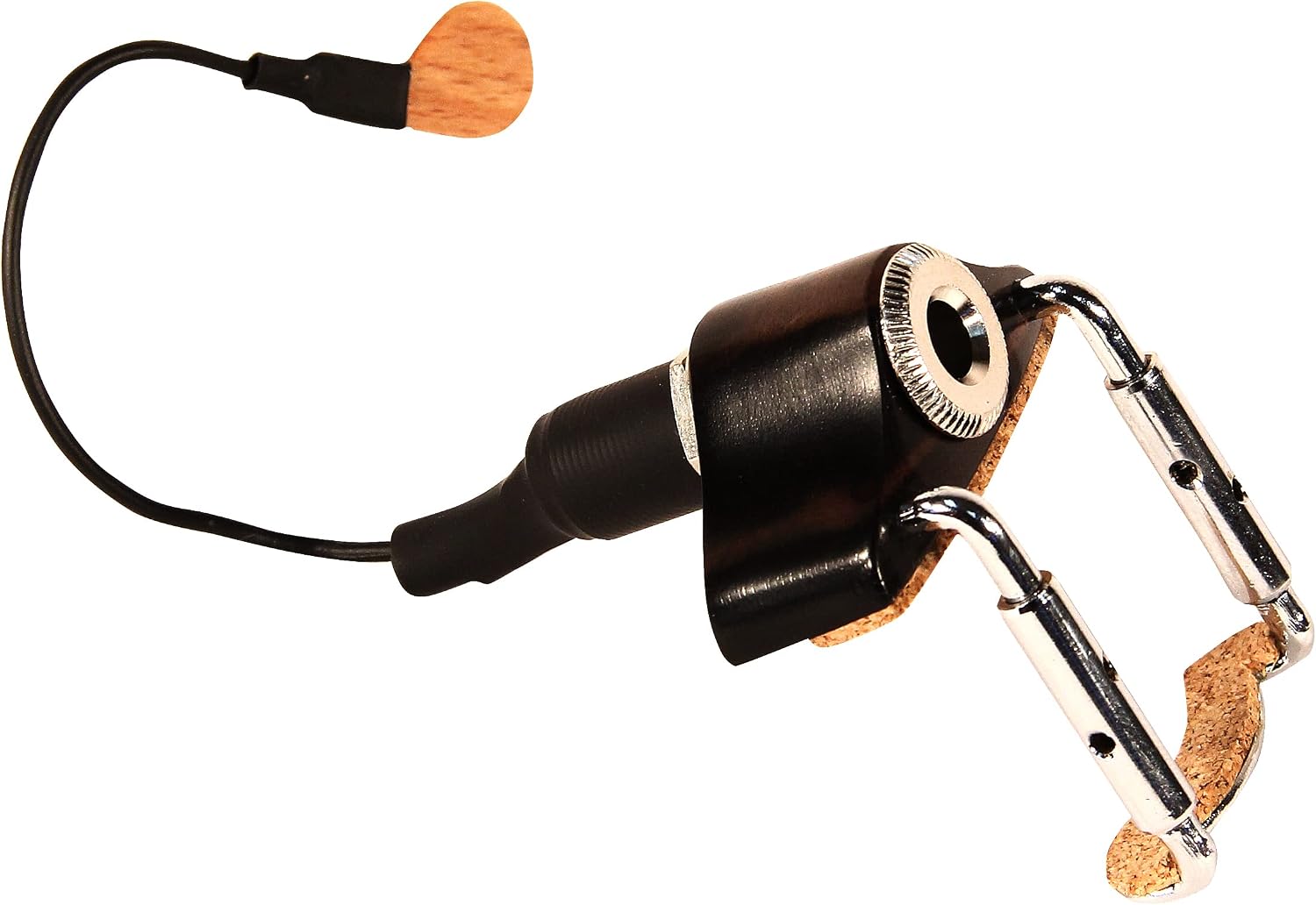
You’ve been playing acoustic violin for years — at sessions, barn dances, festivals — and someone finally hands you a stage slot with a PA system (a speaker setup that projects sound to a crowd). Suddenly your beautiful instrument needs to plug into a cable. A pickup (a small sensor that converts string vibration into an electrical signal) is the bridge between your acoustic violin and that amplification system. The wrong one will make you sound like a plucked rubber band; the right one can sound almost indistinguishable from mic’d acoustic. This guide is written specifically for folk, Celtic, and bluegrass players who want to retrofit — meaning add a pickup to an existing acoustic instrument — without compromising the tone they’ve spent years developing. By the end, you’ll know which pickup category fits your situation, what to budget, and exactly which tradeoffs you’re accepting.
The Three Pickup Families and What They Actually Trade Away
Every violin pickup belongs to one of three families. Understanding the core tradeoff in each one is the decision frame that makes everything else click.
1. Piezo (Contact) Pickups
A piezo pickup — pronounced “pee-AY-zo” — is a small crystal or ceramic sensor that registers physical vibration directly from the instrument’s body or bridge. It does not pick up sound waves traveling through the air; it reads mechanical motion.
What owners consistently report: Piezos are the most feedback-resistant option in a loud stage environment. Feedback is that screech you hear when a microphone picks up its own amplified output and loops it. Because a piezo only responds to the violin’s physical vibration rather than airborne sound, you can stand closer to a monitor wedge without chaos. That resistance is the reason most working folk and session players land here first.
The tradeoff: Piezos color the tone. Published specs and extensive owner discussion on Violinist.com forum threads consistently describe the raw piezo signal as “quacky,” “nasal,” or “plasicky” without a good preamp (a small amplifier that boosts and shapes the signal before it hits the main board). The piezo converts vibration into a high-impedance signal — meaning the electrical signal is sensitive and weak — and needs a buffer or preamp to translate cleanly to a standard instrument cable and PA.
Practical cost range (mid-2026 market): Entry-level clip-on bridge piezos run $30–$80. The Fishman V-200 bridge pickup sits in the $80–$120 range and is one of the most-cited options in Strings Magazine’s amplification roundups. The Barcus-Berry Outsider and the L.R. Baggs Violin Pickup with its dedicated preamp land in the $150–$250 range and represent the sweet spot for gigging folk players based on aggregated review consensus at Sweetwater.
2. Magnetic Pickups
A magnetic pickup works the same way an electric guitar pickup does — it senses the magnetic field disruption caused by a steel string moving. If you play with standard gut or synthetic (non-steel) strings, a magnetic pickup literally will not work. Period.
What this means for folk players specifically: A large portion of Celtic and bluegrass players run Thomastik Dominants, Pirastro Tonicas, or similar synthetic-core strings. Those strings are not magnetic. You would need to switch to steel strings — D’Addario Helicores are the most common recommendation in this context — and that string change will alter your acoustic tone and bow response noticeably.
When magnetic makes sense: If you already run steel strings, or if you play in extremely loud environments like a festival stage with full band amplification, the magnetic pickup’s rejection of acoustic bleed and feedback is unmatched. The Revolution Pickup by Myers Pickups is frequently discussed in Violinist.com community threads for its ease of installation and warm magnetic tone. Prices land around $100–$180.
Bottom line on magnetic: Unless you’re already steel-string or playing in genuinely brutal stage volumes, most folk players end up back at piezo or the hybrid solutions below.
3. Microphone-Based Systems (Internal Mics)
Some systems mount a tiny condenser microphone (a microphone that captures airborne sound pressure) inside the violin body, or externally on the chinrest or shoulder rest. These deliver the most “acoustic” sound because they’re capturing actual acoustic resonance — the same thing a studio mic would hear.
The tradeoff is severe in live contexts: Internal mics are the most feedback-prone option on this list. Sound On Sound’s coverage of acoustic string amplification notes that internal microphone systems require careful EQ (equalization — shaping the frequency content of the signal) and often a notch filter (a narrow cut at the feedback frequency) to work in any stage environment with monitors. For an open-session folk player in a noisy pub, these are often unusable without a dedicated sound engineer running your mix.
Where they shine: Recording, house concerts, or reinforced performance in a well-controlled acoustic space. The Realist CopperHead — often cited in Strings Magazine — sits around $180 and is a hybrid transducer (body-contact, but acoustically voiced) that splits the difference between pure mic and piezo.
By the Numbers: Retrofit Pickup Cost Tiers (Mid-2026)
| Tier | Typical Price Range | Representative Options |
|---|---|---|
| Entry-level piezo | $30–$90 | Generic bridge clips, Fishman V-200 |
| Mid-range piezo + preamp | $120–$280 | L.R. Baggs Violin Pickup system, Barcus-Berry Outsider |
| Hybrid transducer | $150–$250 | Realist CopperHead |
| Magnetic (steel strings required) | $100–$200 | Myers Pickups Revolution |
| Boutique / custom bridge piezo | $300–$600+ | Headway The Band, custom luthier installs |
Installation: What You’re Actually Committing To
This is where folk players with nice acoustic instruments get nervous, and that caution is warranted.
Clip-on bridge piezos require zero permanent modification. You slide the sensor under the bridge foot (the base of the bridge that contacts the instrument’s top), run a thin cable to a clip-on endpin jack or to a small preamp box you can clip to your strap or tailpiece. The Strad has noted in its pickup coverage that this installation is reversible and takes under five minutes. The downside: cables across the instrument body can rattle against the top, and the clip-on output jack can introduce noise if it’s not seated well.
Under-bridge transducers (like the Realist CopperHead) require removing the bridge to seat the sensor properly. This is a job most players hand to a luthier. Budget $40–$80 in labor if you’re not comfortable removing your own bridge. This is not a permanent modification — no wood is cut, no holes are drilled — but it’s more involved than a clip-on, and improperly seated transducers noticeably degrade acoustic tone. Violinist.com forum discussions routinely flag this as the top user error with the Realist line.
Endpin jack installations — where a 1/4” output jack replaces the tailpiece-securing endpin at the bottom of the instrument — require drilling or enlarging the existing endpin hole. This is a permanent modification to your instrument. For any violin worth more than a few hundred dollars, have a luthier do this. The L.R. Baggs system ships with this type of jack and the installation is covered in detail in Sweetwater’s violin pickup guide. Cost: $50–$120 in luthier time.
The rule of thumb: If your acoustic violin is worth less than $500, a clip-on or bridge-seated system you install yourself is a reasonable call. If it’s worth more — especially if it’s a quality hand-made instrument — pay a luthier for any installation that touches the bridge or body.
Preamps, DI Boxes, and Why Signal Chain Matters More Than the Pickup
Here’s the piece most guides skip, and it costs players real money in bad gear choices.
The pickup is only the first link in the chain. The signal then goes to either:
- An onboard preamp — a small battery-powered circuit built into the pickup system or a clip-on unit (like the Fishman Pro-EQ Platinum or the headway EDB-2 belt-clip unit)
- A DI box (Direct Injection box — a device that converts the pickup’s high-impedance signal to a low-impedance signal suitable for a PA’s balanced inputs)
- An acoustic amp designed for high-impedance instruments
Running a piezo directly into a standard PA XLR input without impedance matching is the most common mistake in this space. The result is thin, trebly, lifeless tone — and players blame the pickup when the real problem is impedance mismatch. Sound On Sound’s coverage of acoustic instrument amplification is explicit on this point: a quality DI box or dedicated preamp at the head of the signal chain recovers substantially more of the pickup’s tonal potential.
For a working folk player on a practical budget, the L.R. Baggs Para Acoustic DI ($200 street) is the most consistently praised solution across Sweetwater reviews and Strings Magazine editorial. It handles impedance matching and gives you a five-band parametric EQ to tame feedback frequencies. That single box often does more for your amplified tone than upgrading from a $100 pickup to a $400 pickup.
The Decision Framework: If X, Then Y
If you play loud sessions or festival stages with full band amplification and already run steel strings → Start with a magnetic pickup. The Myers Revolution is the most accessible entry point at under $200.
If you play a mix of sessions, small gigs, and the occasional festival, and you run synthetic strings → A mid-range piezo (Fishman V-200 or L.R. Baggs) paired with the L.R. Baggs Para Acoustic DI is the workhorse rig. Budget $250–$400 total for the system.
If your primary context is house concerts, church gigs, or theater work with a dedicated sound engineer → The Realist CopperHead or a similar hybrid transducer gets you closest to natural acoustic tone and is worth the slightly more involved installation and feedback management.
If you’re still unsure and your instrument is worth protecting → Start with the cheapest clip-on piezo you can find ($30–$50), run it through any DI box, and spend 2–3 gigs understanding what your venue and PA setup actually need. The cheap pickup will sound rough, but it will teach you which problem you’re actually solving — feedback resistance, tonal warmth, ease of setup — before you spend $300+ on a system optimized for the wrong priority.
The retrofit pickup market for violin is genuinely good in 2026. You don’t have to buy a dedicated electric instrument to get a reliable plugged-in sound. You do have to match your system to your actual playing context, build out the signal chain properly, and — if your acoustic violin matters to you — respect it with either a non-invasive installation or a qualified luthier’s hands.
Your next step: Pull up the Sweetwater violin pickup category page and filter by price. Cross-reference the top results against the Strings Magazine amplification guides linked in their online archive. Then come back here and read our deep dive on the L.R. Baggs Para Acoustic DI — it’s the single most impactful upgrade most folk players skip.