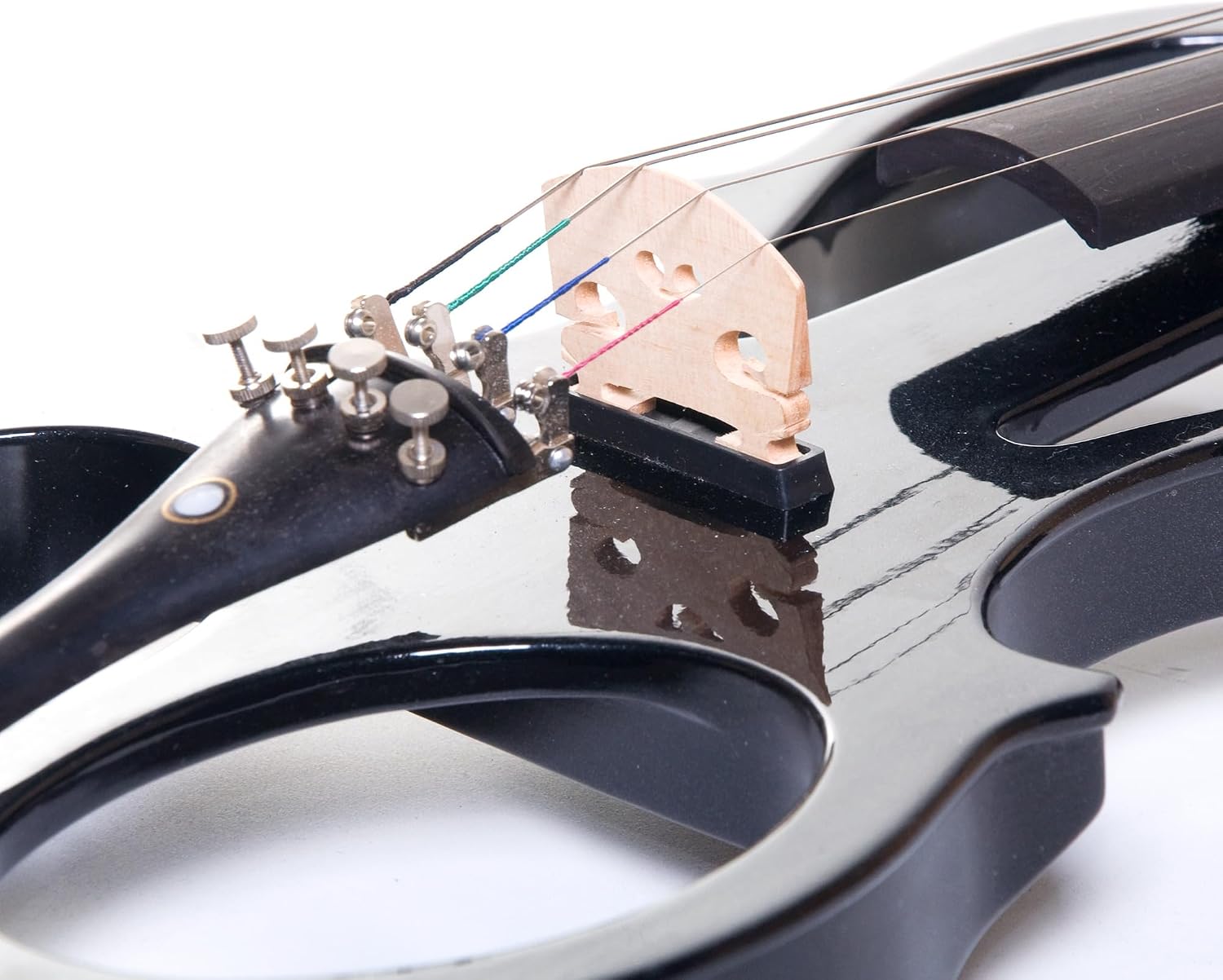
Imagine it’s midnight on a Tuesday. You’ve got thirty minutes before you absolutely must sleep, and your bow arm is itching to run that reel you’ve been fumbling through for a week. The problem: your apartment walls are thin, your neighbors work early, and a full-volume acoustic violin at midnight is a diplomatic incident waiting to happen. This is exactly why the silent practice setup exists—a combination of an electric violin (an instrument that produces very little natural acoustic sound on its own) fed into a headphone amplifier (a compact box that powers headphones and lets you hear yourself with no sound escaping into the room). Done right, it’s nearly inaudible from outside your door while still giving you real, responsive feedback in your ears. This guide walks you through every decision point—instrument, amp, headphones, and supporting accessories—so you can build a rig matched to your budget, your building’s acoustics, and your playing ambitions.
The Core Decision: Which Electric Violin Actually Works for Silent Practice?
Not every electric violin is equally suited to late-night apartment life. The critical variable is acoustic bleed—how much raw, unamplified sound the instrument produces when bowed. A hollow-body electric violin (one that has an actual resonating chamber, like a standard acoustic) bleeds considerably more sound than a solid-body instrument (one carved or molded from solid material with no internal air cavity). At midnight, acoustic bleed is your enemy.
The solid-body rule: For genuine silent practice, you want a solid or semi-hollow body instrument. Per MusicRadar’s 2025 electric violin round-up, solid-body designs typically produce 15–20 dB less acoustic output than a comparable hollow-body instrument when played unamplified—roughly the difference between a conversation and a whisper at close range.
Here’s how the main tiers stack up:
Entry tier ($80–$150): The Cecilio CEVN-1 ($100) and Mendini MV300 ($80) are the two instruments that dominate this space. Both are solid or near-solid body designs. Owners on Reverb and instrument forums consistently flag that the CEVN-1’s build quality is acceptable for practice but that tuning stability can drift quickly, requiring re-tuning every session. The MV300 draws similar feedback—functional for the purpose, but the included bow and strings are almost universally flagged as worth replacing immediately to get a workable sound. Neither instrument will embarrass you in headphones at midnight; both will frustrate you onstage.
Mid tier ($400–$600): This is where silent practice setups get genuinely satisfying. The Yamaha YEV-104 ($500) is the instrument reviewers at Sweetwater and MusicRadar both return to in this bracket. Yamaha’s published specs describe the YEV-104’s “body-resonance structure” as a semi-hollow hybrid designed to deliver acoustic feedback to the player through the chinrest contact point while remaining quiet to the room—a legitimate design choice for practice feel. Owners consistently report that it feels more “alive” under the chin than a dead-silent solid body, which matters enormously for technique development. The Bridge Draco ($400) is the alternative pick here: a fully solid acrylic body with a noticeably quieter acoustic output than the Yamaha, trading some tactile feedback for even lower room bleed.
If X, then Y — entry vs. mid:
- If your primary goal is not waking anyone and you’re on a strict budget, the Cecilio CEVN-1 gets you playing tonight. Plan to replace the strings within 30 days.
- If you’re an advancing player who needs the setup to also serve for gigs or lessons, the Yamaha YEV-104 is worth the step up. The acoustic feedback it provides through the instrument body will accelerate technique work in ways a dead-silent solid body won’t.
The Headphone Amp: The Component Everyone Underestimates
Your electric violin outputs a raw signal through a standard 1/4-inch jack (the same connector you’d find on an electric guitar). That signal is too weak to power headphones directly—it needs a headphone amplifier, a small device that boosts the signal to a level headphones can use. This is where most first-time setup buyers make their most expensive mistake: they either skip the amp entirely (the violin sounds dead and wrong) or they over-invest in a full studio audio interface (overkill for the use case, adds latency complications).
The three viable options for apartment silent practice:
1. Dedicated portable headphone amp ($40–$120): Devices like the Vox amPlug or the Headway Band ($100–$150 street price) are designed for this exact scenario—they plug directly into the violin’s output jack, have a headphone socket on the other end, and often include basic onboard EQ or reverb. Strings Magazine’s coverage of violin amplification options consistently highlights the Headway Band as the most violin-friendly portable amp in this range because its EQ is voiced for the violin’s frequency response rather than guitar. For pure midnight practice with minimal friction, a portable amp is the right call.
2. Compact desktop headphone amp/interface ($100–$250): Units like the Focusrite Scarlett Solo or the Roland Micro Cube let you hear yourself with lower latency than most full-interface setups and often add reverb, which matters psychologically—a totally dry, reverb-free violin signal sounds unnaturally harsh and can actually damage your intonation habits by making every pitch discrepancy brutally obvious without context. Sound On Sound’s headphone amplifier coverage notes that a small amount of room reverb is not an indulgence; it’s acoustically closer to the feedback environment your ear was trained in.
3. Integrated practice amp with headphone out ($150–$300): If you want a setup that works both silently (headphones in, sound off) and with a small speaker when neighbors aren’t a concern, a practice amp with a dedicated headphone jack—like the Fishman Loudbox Mini or the Marshall CODE 25—covers both use cases. The tradeoff is desk space and portability.
If X, then Y — amp decision:
- If you want zero setup friction and to practice on the go (travel, hotel rooms, a friend’s apartment), go with a portable amp like the Headway Band. Plug in, play.
- If you’re building a permanent practice station at a desk, a desktop interface with reverb (Focusrite Scarlett Solo tier) gives you better sound quality and doubles as a recording interface when you eventually want to capture a practice session.
- If you play acoustic gigs and want one device that covers both silent practice and quiet live use, a small practice amp with a headphone out is the most versatile spend.
Headphones, Strings, and the Supporting Gear That Actually Matters
Headphones: Closed-Back Is Non-Negotiable
For silent practice, you need closed-back headphones—a design where the ear cups seal around your ears with no open vents, which keeps sound from leaking out into the room (relevant if someone is sleeping two feet away) and prevents room noise from bleeding back into your monitoring signal. Open-back headphones, which many audiophiles prefer for their wider soundstage, actively leak sound in both directions. They are wrong for this application.
The Sony MDR-7506 (~$100) is the standard recommendation across recording and live-sound forums. Sound On Sound has cited it repeatedly as a reference-grade closed-back option at a non-premium price. Owners flag that the coiled cable is awkward at a music stand; a straight-cable alternative or an extension cable ($10) solves this.
By the numbers:
| Component | Budget Option | Mid Option | What You’re Buying |
|---|---|---|---|
| Instrument | Cecilio CEVN-1 (~$100) | Yamaha YEV-104 (~$500) | Less acoustic bleed, better feel |
| Headphone amp | Generic plug-in amp (~$40) | Headway Band (~$120) | Violin-voiced EQ, less harshness |
| Headphones | Sony MDR-7506 (~$100) | Beyerdynamic DT 770 (~$180) | Closed-back seal, sound isolation |
| Total | ~$240 | ~$800 |
Strings: Don’t Skip This
Both entry-level instruments (CEVN-1, MV300) ship with strings that owners universally describe as marginal. Per Strings Magazine’s coverage of electric violin setup, the string choice on an electric violin affects not just tone but the efficiency of the pickup—a poorly made string with inconsistent core density produces uneven signal output, which makes your headphone amp sound splotchy regardless of quality. A set of D’Addario Prelude or Thomastik Dominant strings ($25–$45) on an entry-level instrument is one of the highest-ROI upgrades in this entire guide.
The Mute Question
Even solid-body electric violins benefit from a practice mute (a rubber or metal device clamped to the bridge that further reduces acoustic resonance) during silent practice. For the Yamaha YEV-104 specifically—which is designed to transmit some resonance to the player—a mute eliminates most of that room bleed without degrading the pickup signal. Owners on violinist.com forums report that a standard Tourte-style rubber mute ($5–$8) works on most electric violin bridges. Confirm bridge dimensions before ordering.
Stand and Cable Management
At midnight, a good instrument stand is a safety device as much as an organizational one. Reaching for a violin in the dark across a cluttered surface is how instruments get knocked over. A folding A-frame stand ($15–$25) that lives next to your practice station keeps the instrument in arm’s reach without risk. Use a short 6-foot instrument cable (1/4-inch to 1/4-inch) rather than a 20-foot cable you’ll trip over in a small room—Sweetwater’s gear guides consistently recommend matching cable length to the actual distance between instrument and amp.
Putting the Full Setup Together
Here’s the decision framework in plain terms:
Pure budget midnight practice ($230–$280 total): Cecilio CEVN-1 + generic portable amp + Sony MDR-7506 headphones + Tourte mute + string upgrade. This rig is functional from night one. Its ceiling is low—you’ll outgrow the instrument—but the amp and headphones carry forward to your next violin.
Serious intermediate practice station ($750–$900 total): Yamaha YEV-104 + Headway Band or desktop interface with reverb + Sony MDR-7506 or Beyerdynamic DT 770 + practice mute + quality strings. This is the setup worth building once and not revisiting for years. The YEV-104’s acoustic feedback property means your technique developed here translates to acoustic playing, which cheaper solid-body instruments don’t deliver as cleanly.
One clear next step: If you’re deciding between the entry and mid tier, the question to ask yourself is: Is this instrument also going to represent me in lessons or slow sessions with other players, or is it purely a solo midnight practice tool? If the former, the Yamaha YEV-104 earns its price differential. If the latter—pure privacy practice, no audience, no performance use—the Cecilio CEVN-1 plus a quality amp and headphones gets you 80% of the result at 30% of the cost.
Check the current street prices on both instruments before committing—the mid-range electric violin market has seen notable price movement through early 2026, and the YEV-104 in particular has appeared at temporary sale prices that narrow the gap with the entry tier considerably.