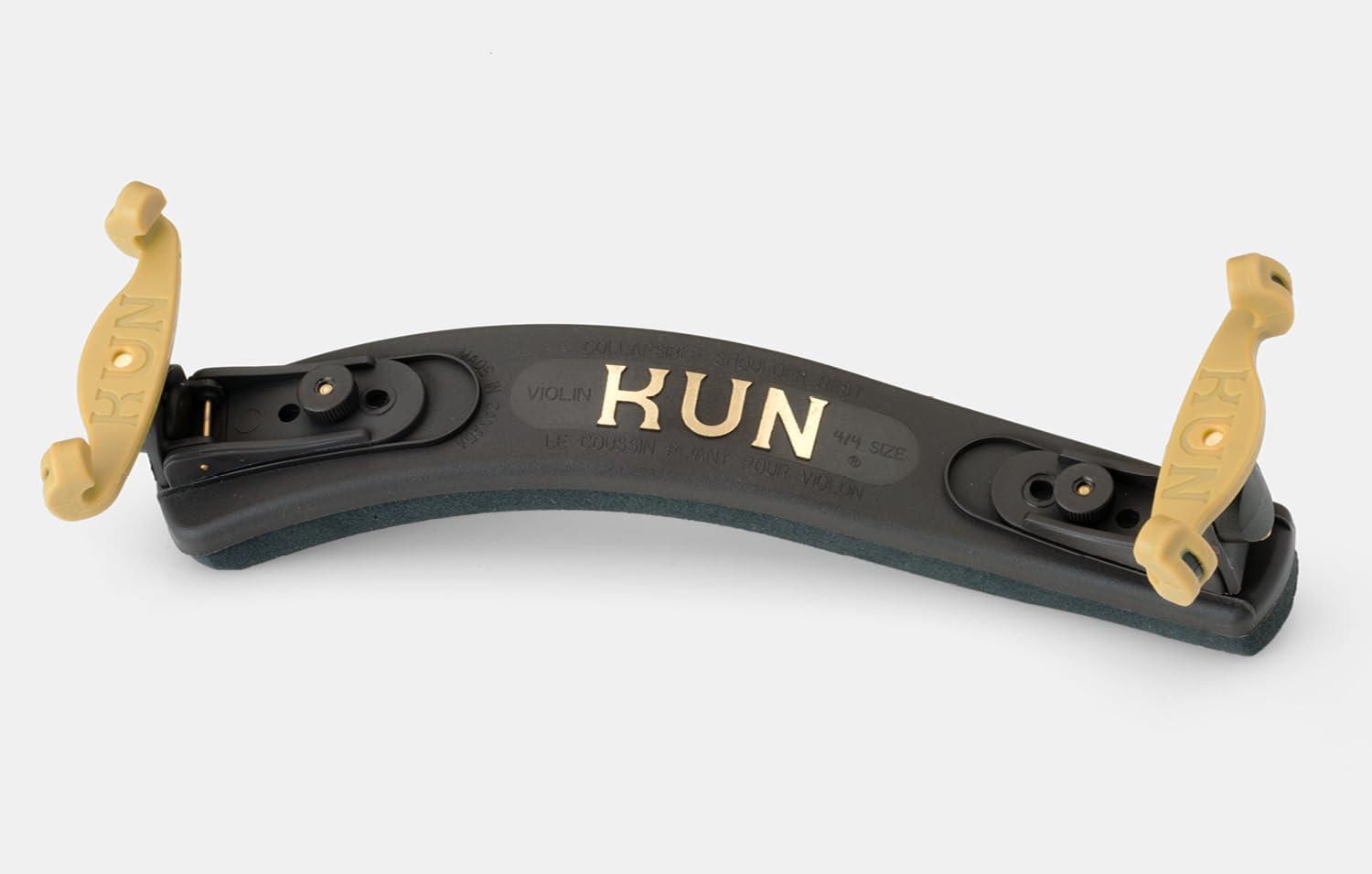
A shoulder rest is the curved support that clips onto the bottom edge of a violin body and bridges the gap between the instrument and your collarbone, so you can hold the violin without death-gripping your chin. On an acoustic violin, most players figure this out early and then forget about it. When you switch to an electric violin — an instrument wired to send its vibration through a pickup rather than projecting acoustically — the shoulder rest question opens back up in ways that can genuinely affect your posture, your sound, and whether the instrument stays put when you’re moving across a stage. This guide walks you through the specific fit, comfort, and stability considerations that change when the body under your chin goes electric. By the end, you’ll have a clear decision framework, not just a product list.
Why Electric Violin Bodies Break All Your Shoulder Rest Assumptions
Here’s the thing most players don’t anticipate: electric violins don’t look like violins. Some barely do. The NS Design CR Series — one of the most stage-proven instruments in the $1,200–$2,000 range — has a narrow, asymmetric center bout (the waist of the body) rather than the traditional hourglass shape. The Wood Violins Stingray takes it further, reducing the body to a skeletal frame. The Yamaha YEV-104, a strong mid-range option around $500, uses a hollow acrylic wing body that’s broader than a standard violin but shaped differently from either.
Why does this matter for shoulder rests? Most shoulder rests — the Kun Collapsible, the Bon Musica, the Wolf Secondo — are engineered to clip onto the lower bout edge of a standard 4/4 acoustic violin. That edge has a specific width, a curve, and a depth. When you bring those same clips to a solid-body or semi-hollow electric, you encounter one or more of three problems:
1. The clips don’t seat. A narrow-body instrument like the NS Design CR gives the clips almost nothing to grab. Owners across multiple Reverb listing comment sections and the Violinist.com community forums report the Kun Collapsible sliding off CR-series instruments during active playing. The standard clip assumes roughly 30–34 mm of bout depth; some electric bodies run 20–24 mm.
2. The rest tilts the instrument awkwardly. If your electric has a flat back rather than the arched back of an acoustic, the feet of a rest designed for an arched back will pitch the instrument forward or to the side. The Strad’s injury-prevention feature archive notes that uncompensated tilt creates chain reactions up the neck and shoulder that don’t show up as pain immediately — they show up six months later.
3. The rest itself becomes the tone killer. On an acoustic, a shoulder rest that damps the back plate costs you projection. On a solid-body electric, the vibration chain is different — sound comes from string movement at the pickup, not plate resonance — but a poorly fitted rest that torques the instrument body can still affect contact at the chin rest and, on semi-hollow electrics like the YEV-104, can introduce unwanted mechanical rattle that your pickup will faithfully reproduce through the PA.
The Fit Variables That Actually Matter on an Electric
Let’s get specific, because “fit” on an electric violin breaks into three independent variables that you need to assess separately before buying a rest.
Bout depth and clip clearance. Measure the depth of your instrument’s lower bout — the edge where the shoulder rest clips would attach. If it’s under 28 mm, you are outside the design envelope of most standard rests. In that range, a rest with adjustable or replaceable feet (the Bon Musica is the go-to recommendation here, based on its reputation across Violinist.com’s equipment discussions) is more likely to work than a fixed-foot rest. The Bon Musica’s curved metal frame also allows you to custom-bend it once — players who’ve adapted it for NS Design instruments have documented this approach in multiple forum threads.
Back geometry: flat vs. arched. Run your hand across the back of the instrument. Traditional violins arch gently; many solid-body electrics are flat. Rests with rubber feet positioned for an arched back will rock on a flat surface. Look for rests with independently adjustable foot height — the Wolf Forte Secondo allows this, and MusicRadar’s 2025 buyer’s guide cites it as one of the most body-shape-agnostic options at its price point (~$40–$55 range).
Scroll-end clearance for onboard electronics. This one is easy to miss. Some electric violins route volume, EQ, or pickup blend controls near the lower bout — the NS Design CR Series places its three-band EQ and volume wheel on the lower tailpiece area. A shoulder rest that extends across the back of the instrument body needs to clear those controls. Before buying, mock up the footprint with a piece of paper.
By the numbers: typical bout depths
| Instrument | Approx. bout depth | Standard rest compatibility |
|---|---|---|
| Yamaha YEV-104 | ~32 mm | Most standard rests fit |
| NS Design CR5 | ~22 mm | Specialized fitting required |
| Wood Violins Stingray | ~18–20 mm | Purpose-built or custom only |
| Acoustic 4/4 average | ~30–34 mm | Standard rests designed for this |
Specs drawn from Sweetwater product listings and manufacturer documentation; verify against your specific serial, as tolerances vary by production run.
Stage Stability: A Different Problem Than Practice Stability
There’s a meaningful distinction between a shoulder rest that’s stable enough for stationary practice and one that holds through a two-hour folk or Celtic set where you’re moving, turning, and possibly fiddling without a chin rest clamp because your instrument’s body geometry doesn’t accommodate one cleanly.
Strings Magazine’s 2024 electric violin buyer’s guide makes a point that professional-tier players echo consistently: the stability demands on a shoulder rest scale with your movement vocabulary. A classical player standing at a music stand is not the same use case as a Celtic session player moving through a festival set, and neither is the same as a working electric violinist using a loop pedal setup that requires frequent instrument repositioning while looping builds.
For stage use, the failure modes to eliminate are:
- Creep. The rest slowly migrates toward the scroll during a set. Happens when clip tension is insufficient for the bout edge. Owners report this most often with standard rests on narrow-body instruments.
- Shock release. The rest pops off when the instrument is bumped or swung. More common with instruments that have rounded or tapered lower bout edges.
- Rattle transmission. A loose rest introduces mechanical noise. On a solid-body electric with a hot pickup, this gets amplified. This is the failure mode players almost never anticipate until soundcheck.
The fix isn’t always a different shoulder rest — sometimes it’s adding a thin strip of non-slip rubber or cork sheet to the clip contact points, a $3 modification that players across Violinist.com threads recommend before upgrading to a more expensive rest. But if your instrument’s bout depth is genuinely outside standard parameters, no amount of friction tape compensates for clips that have nothing structural to grip. At that point, you’re looking at either a purpose-designed rest for your specific instrument (NS Design sells a custom rest solution for their CR and NXT series through their authorized dealer network) or a luthier-fitted custom sponge-type rest without clips, which several professional Celtic and folk players have moved to for stage use.
The Decision Frame: If X, Then Y
You have enough context now to make a direct call. Here’s the framework:
If your electric violin has a standard or near-standard bout depth (28 mm or above) and a roughly traditional body outline — Yamaha YEV-104, Bridge Draco, many entry-to-mid instruments — your existing acoustic shoulder rest will likely work, but verify clip seat and back geometry before assuming. A Bon Musica or Wolf Forte Secondo gives you the most adjustability if you’re buying new. Budget: $35–$65 covers this tier well.
If your electric has a narrow or non-standard body — NS Design CR/NXT series, Wood Violins Stingray, custom luthier builds — do not assume a standard rest works. Check manufacturer documentation first (NS Design publishes accessory compatibility notes through their dealer network; Sweetwater’s product pages include this for the CR series). A purpose-fitted solution or a clipless sponge rest is likely the right answer. The time cost of troubleshooting an ill-fitting rest in a rehearsal or soundcheck is real.
If you are dealing with rattle or mechanical noise through your pickup — even if the rest physically stays on — treat this as a fit problem, not an instrument problem. The Strad’s archive on shoulder support notes that even a 1–2 mm of contact inconsistency can introduce vibrational artifacts. Recheck all four contact points (both feet, both clips) for firm, even pressure.
If you perform with significant movement — Celtic fiddle, folk, or any set where you’re not stationary — prioritize clip retention over ergonomic adjustability. A rest that fits your anatomy but pops off at bar 48 is worse than one that’s slightly less comfortable but stays put for two hours. Owners in the Violinist.com community consistently recommend testing any new rest through at least one full rehearsal before committing to it for a paid gig.
If you’re playing a boutique or custom instrument above $3,000 — bring the instrument to a luthier or a well-stocked strings shop before buying a rest online. The boutique market has enough variation in body geometry that forum advice written for a production instrument may not apply. The cost of a consultation is trivial against the cost of a rest that doesn’t fit a custom body.
Your Next Step
Pull up the spec sheet for your specific instrument — manufacturer site or your dealer’s listing — and note the lower bout depth. If it’s not listed, email the manufacturer or dealer; this is a routine question they can answer quickly. Then cross-reference against the clip specifications for whichever rest you’re considering.
If you’re in the market for a new instrument and the shoulder rest question is unresolved, the Yamaha YEV-104 and Bridge Draco reviews elsewhere on ElectricFiddles.com both include notes on accessory compatibility — start there before you commit to a body geometry that complicates your setup further downstream.