You’re at a Celtic session — a loud, sweaty pub room packed with fiddles, a bodhran hammering the back of your skull, and a sound tech who last saw an electric violin in 2009 and is now pointing at your instrument like it insulted his grandmother. You need a violin that plugs in cleanly, feeds the PA without tonal weirdness, holds its own in a mix dominated by acoustic instruments, and doesn’t embarrass you when a session leader leans over and asks why it sounds like that. The electric violin — a violin designed to output its sound via an onboard pickup and amplifier rather than acoustically through a hollow wooden body — is no longer a novelty in folk and Celtic circles. But not every electric violin is built for this specific, high-stakes environment. This article compares two instruments that keep showing up in mid-range buying conversations: the Yamaha YEV104 (street price approximately $499–$549 as of May 2026) and the Kennedy Violins Bunnel Edge (street price approximately $349–$399). Both target players stepping past entry-level but not yet ready for the four-figure NS Design or ZETA tier. Here’s how they actually stack up when you’re mid-session and the pressure is on.
What You’re Actually Buying at This Price Point
Before the comparison lands, it’s worth naming what “mid-range” means in practical terms for an electric violin. At the entry tier ($80–$150), instruments like the Mendini MV300 or Cecilio CEVN-1 come with factory-soldered pickups that were an afterthought, flimsy output jacks that work loose mid-gig, and finishes that chip under the abuse of a regular rehearsal schedule. At the premium tier ($1,200 and up), you’re buying into proprietary preamp systems, hand-shaped body contours, and a direct line to a luthier if something goes wrong.
The $350–$550 window — where both these instruments live — is the hardest tier to buy intelligently, because the gap between a smart purchase and a frustrating one is invisible until you’re three sessions in. Manufacturers at this price point have typically upgraded pickup quality and output jack construction over entry-level, but they’re making real cost tradeoffs somewhere: body resonance, hardware finish, string action consistency out of the box, or preamp sophistication. Your job as a buyer is to figure out where each maker chose to cut.
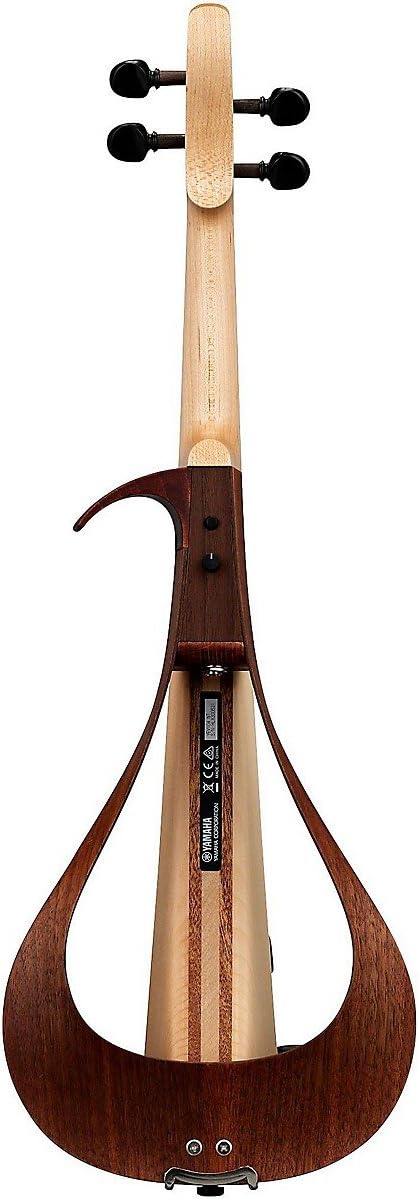
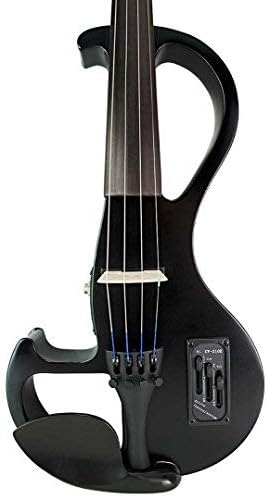
According to the Sweetwater product overview for the Yamaha YEV Series Electric Violins, Yamaha built the YEV104 around a laminated spruce top and maple back — an intentional acoustic-electric hybrid design that gives the instrument some natural resonance for silent practice while still outputting a signal via a piezo pickup. A piezo is a sensor that converts the physical vibration of the bridge into an electrical signal. The Bunnel Edge, per Kennedy Violins’ published specifications, takes a different approach: a fully solid-body carved design with no acoustic chamber, focused entirely on amplified output and feedback resistance.
That single design choice has cascading consequences for Celtic players specifically.
Tone, Reliability, and Session Performance: Three Critical Comparisons
Tone Character — The Piezo Story Each Instrument Tells
Piezo pickups at this price point share a reputation that follows them everywhere: they can sound brittle, nasal, or “quacky” — especially in the upper register where Celtic music lives most of the time. How a maker addresses that tendency is the real differentiator.
The YEV104’s semi-hollow body gives the piezo something to “hear” acoustically — the top plate vibrates slightly before the signal hits the pickup, which warms the output character and reduces the cold, clinical quality that plagues fully solid-body piezos in cheaper instruments. Community discussions on Violinist.com consistently note that YEV players describe the tone as closer to acoustic than other electrics at this price, though reviewers also flag that it still requires EQ help to sit cleanly in a live mix without sounding muddy at the low-mid frequencies.
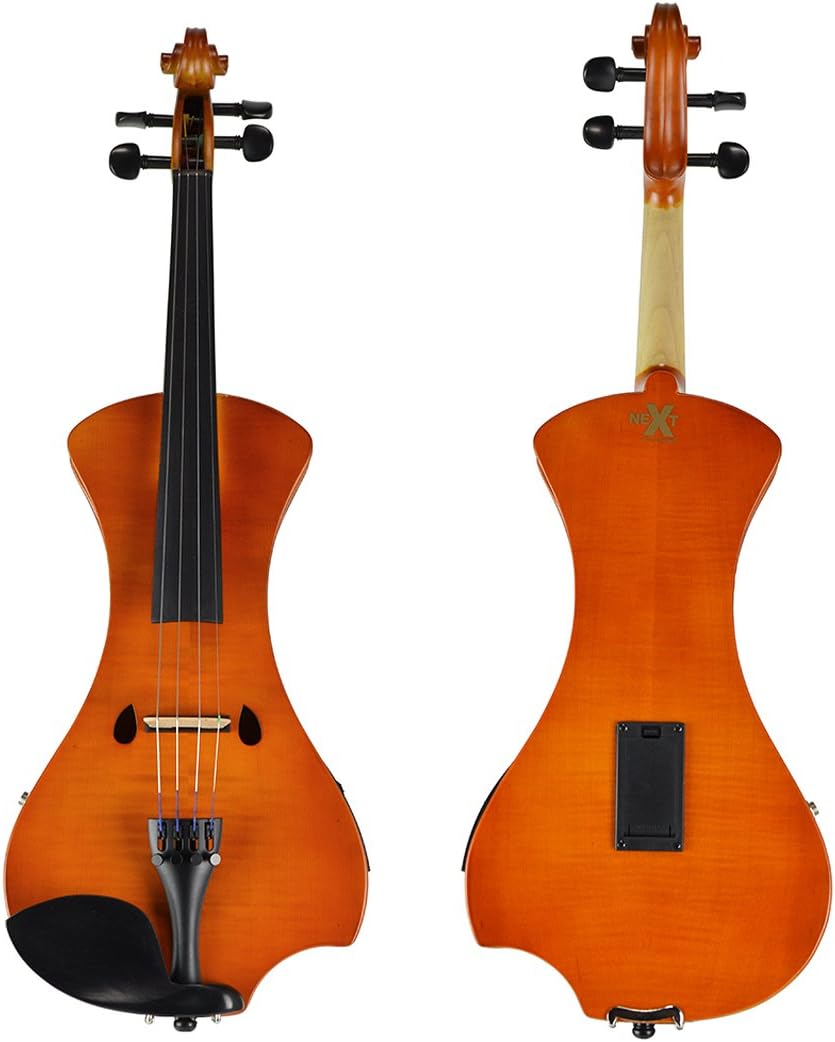
The Bunnel Edge outputs a crisper, more present signal — thinner and brighter by nature of its solid construction. For Celtic fiddling specifically, some players will prefer this: the cut of a jig or reel in a loud session benefits from presence in the 3–5 kHz range, and the Edge delivers that naturally. MusicRadar’s roundup titled “Best electric violins 2025: our pick of the top models” notes that solid-body electrics at this tier tend to sit more forwardly in a live mix without fighting for space — an honest description of the tradeoff. You gain mix presence; you give up warmth.
The practical decision frame: If you’re routing into a dedicated violin-friendly DI box (a direct injection box converts your instrument signal to a balanced signal for the PA) or a preamp with real EQ capability, the Edge’s brighter baseline is easier to sculpt. If you’re plugging straight into a PA or amp with minimal EQ, the YEV104’s warmer out-of-the-box character gives you more forgiveness on a pub stage where you can’t spend five minutes dialing in sound.
Electric HONEY
$528.88
In stock on Amazon
Check price on AmazonStage Reliability — Output Jacks, Weight, and Feedback
This is the section that matters most for working musicians, and it’s where aggregated owner feedback over 12–18 months of real use tells a more nuanced story than spec sheets.
Output jack stability. Across owner forum discussions on Violinist.com, the YEV104’s output jack — a standard 1/4-inch mono connection — draws consistent positive notes for feeling solid and well-seated. The Bunnel Edge has seen scattered reports of jacks becoming intermittently noisy after six to twelve months of regular use, though Kennedy Violins’ customer service is generally reported as responsive by owners who pursued warranty claims. For a regular-session player, however, “responsive warranty” is cold comfort mid-gig; jack stability at point of purchase is the variable that matters most.
Weight and shoulder fatigue. The YEV104’s semi-hollow construction keeps weight down — published specifications list the body at approximately 440g, in the range of a standard acoustic violin. The Bunnel Edge’s solid body runs heavier. For a two-hour session, that difference is mostly academic. For a festival weekend with three sets a day across four days, the Strings Magazine Electric Violin Buyer’s Guide 2024 explicitly flags cumulative fatigue as an underrated variable in instrument choice — and on this axis, the YEV104 has a structural advantage.
Feedback resistance. This one reverses the advantage. The YEV104’s semi-hollow body, while tonally warmer, is more susceptible to acoustic feedback — the howl you get when amplified sound from speakers re-enters a resonant instrument body and loops. On a small stage with monitors pointed toward you, which is common in Celtic sessions and folk festivals, this can require careful positioning. The Bunnel Edge’s solid body is genuinely more feedback-resistant, consistent with design principles described in The Strad’s overview “Electric violins — what players need to know.” For high-volume environments, that’s a real reliability win.
String-to-string clarity in fast passages. Celtic playing at speed — reels at 120+ bpm, slip jigs, hornpipes with ornamental cuts and rolls — demands that each note articulates cleanly without sustain from the previous note bleeding into the next. Owners who discuss this specifically tend to report that the YEV104 carries slightly more sustain than feels ideal for ornament-heavy traditional playing, while the Edge’s solid body gives a faster decay that some traditional players actively prefer. This is a style-dependent tradeoff, not a quality gap.
Electric HONEY
$528.88
In stock on Amazon
Check price on AmazonThe Hidden Cost Layer — Signal Chain Investment
At roughly $499 for the YEV104 and $369 (approximate mid-range of street pricing) for the Edge, neither instrument includes an external preamp. If you’re new to electric violin signal chains, that omission is expensive in practice.
A passable dedicated violin preamp — such as a LR Baggs Venue DI or a Headway EDB-2 — adds $150–$250 to your effective cost. Without one, a piezo straight into a PA or guitar amp will sound thin, brittle, and unpleasant regardless of which instrument you chose. MusicRadar’s coverage of electric instrument setup in their “Best electric violins 2025” roundup consistently emphasizes that preamp investment is non-negotiable for stage use with piezo-equipped instruments.
Factor that in and your actual comparison looks like this:
- YEV104 + preamp: approximately $650–$800 total invested
- Bunnel Edge + preamp: approximately $520–$650 total invested
The Edge’s price advantage narrows when you’re doing full system math, but it doesn’t disappear. If budget is a genuine constraint and you’re already working with a preamp from a previous instrument, the Edge becomes more competitive. If you’re starting from zero signal chain, the YEV104’s out-of-the-box warmth reduces — though doesn’t eliminate — your dependence on a sophisticated preamp.
Electric BLACK
$498.88
In stock on Amazon
Check price on AmazonBy the Numbers
| Feature | Yamaha YEV104 | Kennedy Bunnel Edge |
|---|---|---|
| Street price (May 2026) | ~$499–$549 | ~$349–$399 Electric BLACK — $498.88 |
| Body design | Semi-hollow spruce/maple | Solid body Electric HONEY — $528.88 |
| Pickup type | Piezo (bridge-mounted) | Piezo (bridge-mounted) Electric HONEY — $528.88 |
| Onboard preamp | None | None Electric HONEY — $528.88 |
| Feedback resistance | Moderate | High Electric HONEY — $528.88 |
| Weight | ~440g (lighter) | Heavier Electric HONEY — $528.88 |
| Output jack reliability (owner reports) | Consistently positive | Scattered concerns after 6–12 months Electric HONEY — $528.88 |
The Decision Rule
If you’ve read this far and you’re still deciding, here’s the framework that should close it.
Choose the Yamaha YEV104 if:
- Your sessions are in moderate-volume environments — pub sessions, folk clubs, acoustic stages — where feedback risk is manageable and tonal warmth is the priority
- You’re plugging into a simple PA or amp without much EQ capability and need the instrument to do tonal heavy lifting out of the box
- Shoulder comfort and weight matter across long playing days or multi-day festival runs
- You’re willing to pay the $100–$150 price premium for the more established output jack reliability record and warmer acoustic-electric character
Choose the Kennedy Bunnel Edge if:
- You’re playing loud stages or festivals with monitors close to your position and feedback resistance is a genuine concern
- You already own or plan to invest in a quality preamp that can add warmth to a brighter baseline signal
- Budget is a real constraint and the roughly $130 gap between the two instruments represents meaningful money you can redirect toward preamp quality
- You prefer the faster decay character that solid-body construction gives to Celtic ornamentation work — cuts, rolls, and trebles that need clean separation between notes
Neither instrument is a wrong choice for a Celtic session player at this tier. Both represent significant steps above the entry-level instruments they’re designed to replace. The YEV104 earns its premium in out-of-the-box playability and tonal warmth, supported by Sweetwater’s product documentation and the community consensus on Violinist.com. The Edge earns its place in budget-conscious rigs where the savings get redirected to preamp quality, and where solid-body feedback resistance matters more than acoustic warmth — a distinction The Strad’s electric violin overview frames as fundamental to how players should match instrument design to their playing environment.
Electric HONEY
$528.88
In stock on Amazon
Check price on AmazonYour next step: Before you commit to either, verify current street pricing on both instruments — prices at this tier shift with seasonal promotions, and a $50 swing in either direction can change the calculus. Then read our deep-dive guide on preamp pairing for electric violin to understand exactly what you’ll need to complete either rig for stage use.